
The preservation of cultural heritage serves as an instrumental bridge for the Sri Lankan diaspora, particularly for those residing in Australia, Canada, and the United Kingdom, who seek to maintain a profound connection with their ancestral roots. Amongst the myriad of traditional observances, the Sri Lankan wedding ceremony, specifically the Sinhalese Buddhist Poruwa ceremony, stands as a superlative example of historical continuity and symbolic depth. These ceremonies are not merely social gatherings; they are meticulously orchestrated rituals replete with ancient customs that have been refined over two millennia. For the modern couple navigating a globalised world, understanding these traditions is essential for honouring the past while embarking upon a shared future.
The Historical Genesis of the Poruwa Ceremony
The origins of the Poruwa ceremony are deeply rooted in the historical fabric of Sri Lanka, with archaeological and literary evidence suggesting that these practices have been observed for approximately two thousand years. Historical records indicate that the ceremony was traditionally conducted in the open air, often within a designated area of the village, before evolving into the more structured, elevated platform used today. A significant historical milestone in this tradition is the presence of the decorated granite Magul Poruwa at the Magul Maha Vihara in Lahugala, located within the Ampara district. This ancient site provides a tangible link to the royal matrimonial customs of the past, suggesting that the Poruwa was once a sanctified space reserved for the nobility before it became a universal feature of Sinhalese weddings.
Architectural Symbolism: The Poruwa Platform
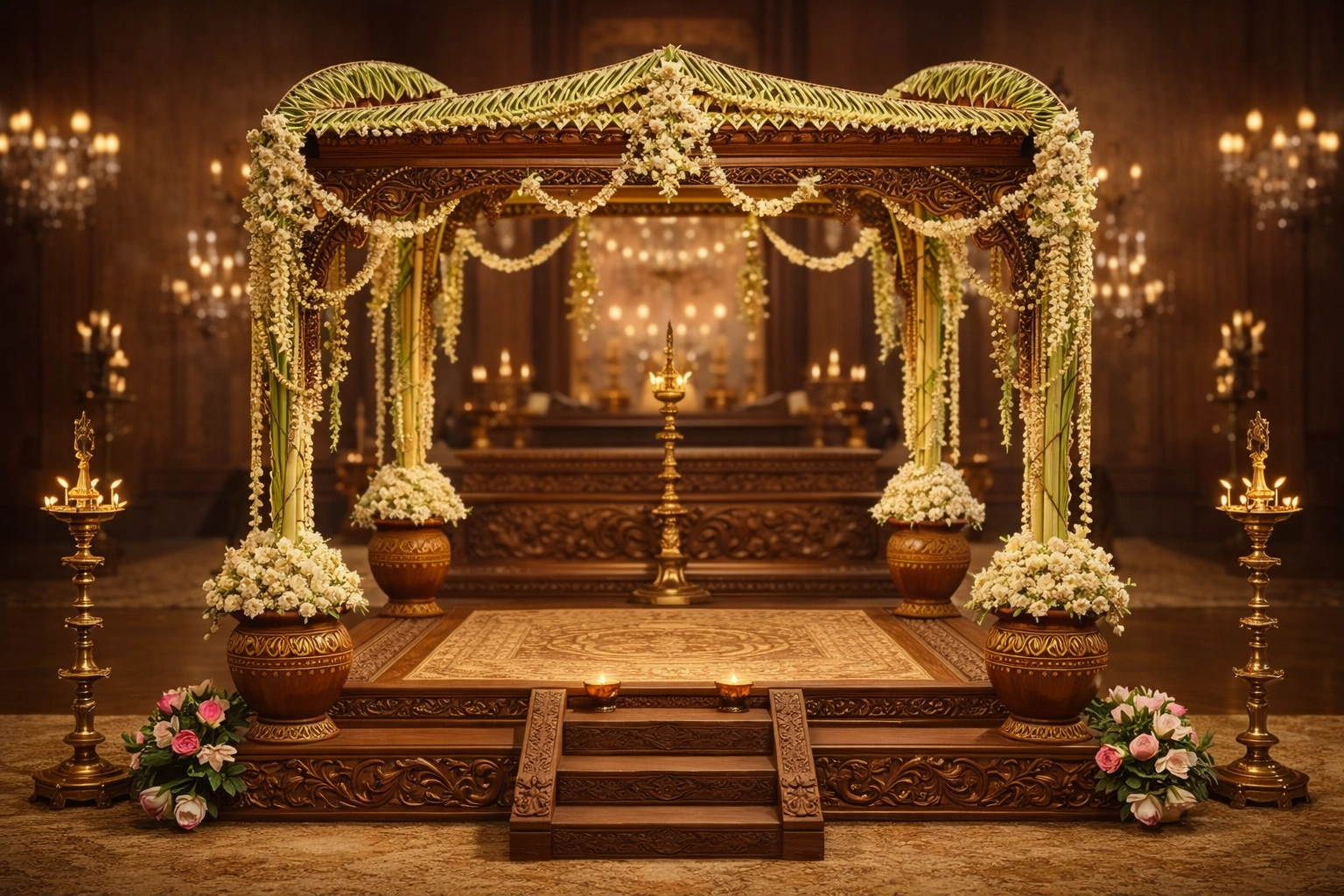
The Poruwa itself is a beautifully constructed wooden platform, which functions as the symbolic antithesis of the mundane world, representing the sanctified home the couple will inhabit together. The construction of the Poruwa is governed by specific aesthetic and ritualistic guidelines; it is traditionally adorned with young coconut leaves (gok-kola), jasmine flowers, and lotus blossoms, creating a space that is both visually arresting and spiritually significant. At each of the four corners, earthen pots known as punkalas are placed. These vessels, overflowing with coconut flowers, serve as symbols of prosperity and abundance, ensuring that the couple’s union is favoured by the elements of nature and the divine.
The Choreography of Ritual: Entry and Offerings
The commencement of the ceremony is marked by the entrance of the couple onto the Poruwa, a moment that is typically synchronised with an auspicious time (nekatha) determined by astrological calculations. It is customary for the couple to step onto the platform leading with their right foot, a gesture intended to invite good fortune and positive energy into their marriage. Once situated, the couple greets one another and their families with palms held together in the traditional Ayubowan gesture, acknowledging the presence of the community and the divine.
A central ritual involves the offering of betel leaves. The bride and groom are presented with sheaves of betel leaves, which they accept and subsequently let fall onto the Poruwa. This act is repeated seven times, with each sheaf representing a generation of ancestors from both the maternal and paternal lineages. By performing this ritual, the couple acknowledges the foundational role of their heritage and seeks the blessings of their forebears, ensuring that the wisdom of the past is carried forward into their new life.
The Binding Union: The Water Pouring Ritual
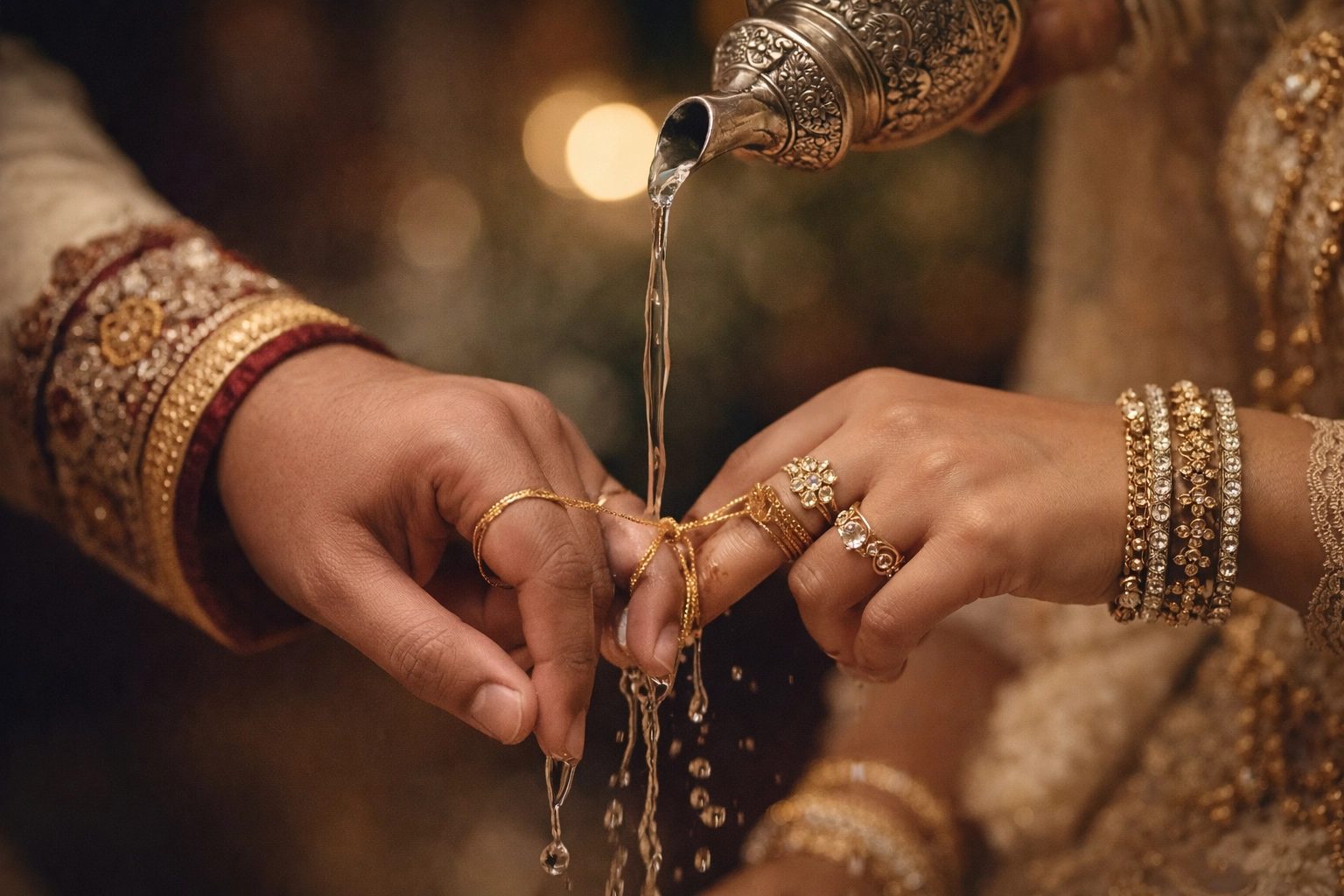
Perhaps the most poignant moment of the Poruwa ceremony is the binding of the couple, which symbolises their transition from two individuals into a single, unified entity. This is traditionally facilitated by a maternal uncle, who ties the pinky fingers of the bride and groom together with a sacred thread or a gold chain. Once the fingers are bound, water is poured over the union from a ceremonial silver vessel. This act of libation is intended to signify that the marriage is as eternal and inseparable as the earth and the water. It is a moment of profound solemnity, observed in silence by the gathered guests, as the physical and spiritual bonds of matrimony are solidified.
Vocal Blessings: Ashtaka and Jayamangala Gatha
The auditory landscape of a Sri Lankan wedding is as significant as its visual elements. Throughout the ceremony, the Ashtaka, religious stanzas or poetic verses, are recited by a proficient elder or a professional narrator. These chants are instrumental in invoking the protection of the deities and ensuring that the couple is shielded from malevolence. The Ashtaka serves to narrate the significance of each ritual, providing a pedagogical element to the ceremony for those in attendance.
Complementing the Ashtaka is the performance of the Jayamangala Gatha. This traditional Buddhist chant is typically performed by a group of young girls, whose voices harmonise to tell stories of wisdom, compassion, and the triumph of the spirit. The inclusion of the Jayamangala Gatha serves as a spiritual benediction, enveloping the couple in a protective layer of sound that celebrates the virtues necessary for a successful and harmonious marriage.
Cultural Adornment: The Attire of Heritage
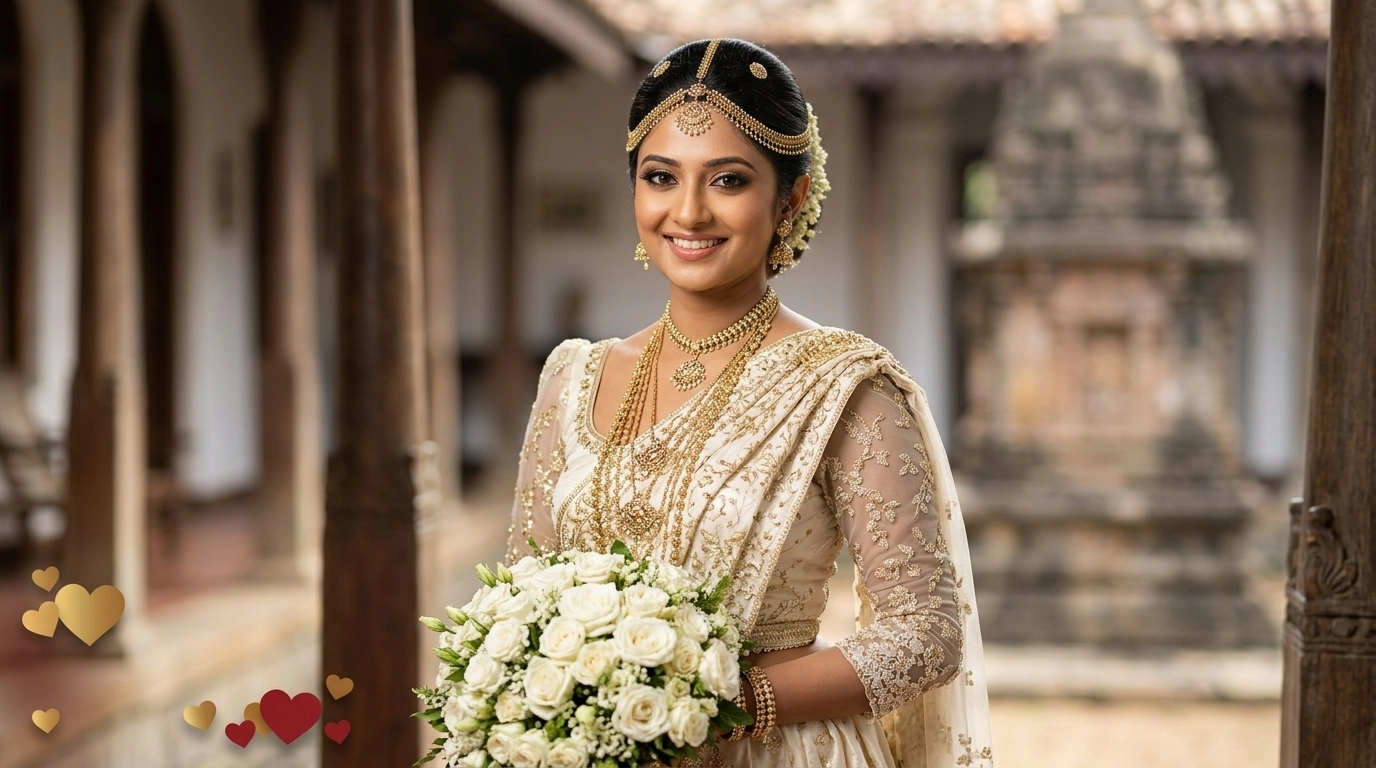
The aesthetic grandeur of the ceremony is further elevated by the traditional attire worn by the couple. The bride typically wears the Osariya, a Kandyan-style saree characterised by its elegant draping and intricate embroidery. She is adorned with the Nalalpata (a ceremonial headpiece) and seven traditional gold necklaces, each carrying its own symbolic weight. The groom, in many instances, wears the Mulbiya or the traditional Kandyan Nilame attire, which includes a velvet jacket embroidered with gold thread and a distinctively shaped hat. This attire is not merely decorative; it is a manifestation of cultural pride and a tribute to the regal history of the island.
Navigating Modern Matrimony with eLanka
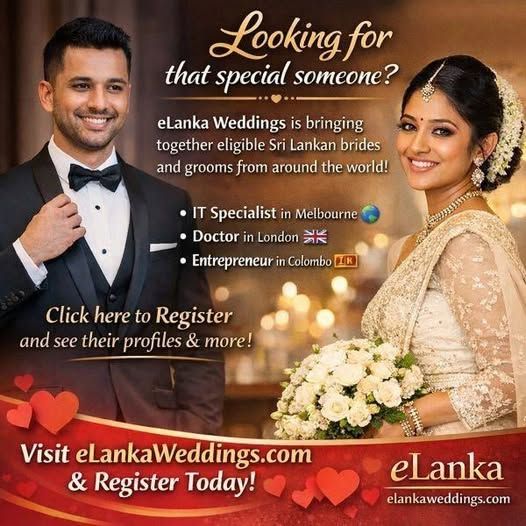
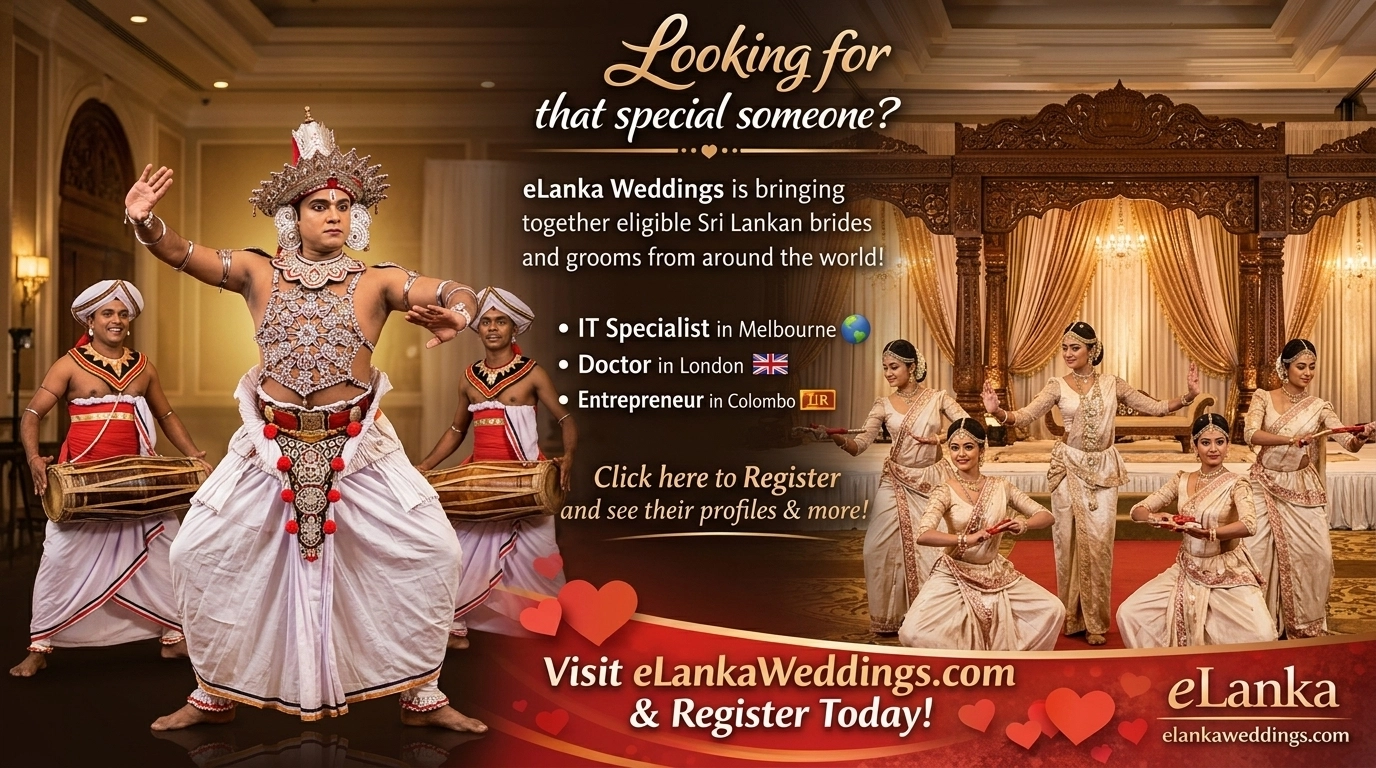
In the contemporary era, the process of organising a wedding that honours these intricate traditions can be a formidable undertaking, particularly for those living far from the shores of Sri Lanka. Recognition of this challenge has led to the development of digital platforms designed to facilitate these connections. eLanka Weddings serves as a premier digital hub for prospective brides and grooms within the global Sri Lankan community. Whether one is seeking an IT specialist in Melbourne, a medical professional in London, or an entrepreneur in Colombo, eLanka Weddings provides a sophisticated platform to find a partner who shares a common heritage and a mutual respect for these venerable traditions.
Furthermore, for those who require a comprehensive academic and practical guide to these customs, a dedicated resource is available in the form of an eBook. The Sri Lankan Wedding Traditions Guide on Etsy offers an in-depth exploration of the rituals, providing the historical context and step-by-step instructions necessary to execute a traditional ceremony with authenticity and grace.
Conclusion
The Sri Lankan wedding ceremony is a testament to the enduring power of culture and the importance of ritual in defining the human experience. By embracing the Poruwa ceremony and its associated customs, couples are able to weave the threads of their ancestry into the fabric of their modern lives. As the diaspora continues to flourish globally, the commitment to these traditions ensures that the richness of Sri Lankan heritage remains a vibrant and instrumental part of the community’s collective identity.
Source: https://www.elanka.com.au/embracing-your-heritage-a-guide-to-sri-lankan-wedding-traditions
This article was written based on the source https://www.elanka.com.au/embracing-your-heritage-a-guide-to-sri-lankan-wedding-traditions, kindly email us at info@eLanka.com.au if any information needs to be corrected.
At eLanka, we respect the rights of creators. If we have used an image you own and you’d like it removed, please email us at info@elanka.com.au and we’ll handle it promptly.


