
In an era defined by ecological urgency and the imperative for sustainable industrial practices, Sri Lanka has officially inaugurated its first-ever Zero-Waste Cinnamon Processing Center. Marking a profound milestone for the nation’s agricultural technology and export sectors, this pioneering facility was established following the formal signing of a landmark Memorandum of Understanding (MoU). The collaborative venture unites the Ministry of Science and Technology, the Industrial Technology Institute (ITI), and the University of Ruhuna in a concerted effort to maximize the economic utility of Ceylon Cinnamon while championing a robust circular economy.
For generations, Ceylon Cinnamon, scientifically recognized as Cinnamomum verum, has stood as a crown jewel among Sri Lanka’s traditional exports. Renowned globally for its delicate aroma, superior flavor profile, and low coumarin content, true cinnamon has commanded international reverence. However, traditional processing methods have historically generated considerable organic byproducts and agricultural residue, leaving untapped potential in leaves, twigs, and bark scraps. The inauguration of this state-of-the-art processing center represents a decisive paradigm shift, transforming what was once considered waste into high-value commercial derivatives through rigorous scientific innovation and institutional synergy.
A Tripartite Alliance for Technological Advancement
The genesis of this transformative initiative lies in the strategic alignment of governmental oversight, institutional research prowess, and academic excellence. By bridging the gap between theoretical science and commercial application, the Ministry of Science and Technology, the Industrial Technology Institute (ITI), and the University of Ruhuna have formulated a comprehensive roadmap for agro-industrial modernization.

Institutional leaders involved in the project emphasize that sustainable agricultural growth can no longer rely solely on raw export volumes. Instead, value addition through advanced biotechnology and precision engineering is paramount. The collaborative framework ensures that continuous research from academic laboratories directly feeds into industrial processing lines, enabling local producers to meet stringent international quality benchmarks and environmental compliance standards.
The Mechanics of a Circular Bio-Economy
At the heart of the new facility is an intricate, closed-loop processing model designed to extract maximum value from every single component of the cinnamon harvest. Rather than discarding leftover biomass, the center employs advanced thermal and chemical engineering principles to repurpose organic material into marketable commodities:
- Specialized Essential Oil Extraction: Freshly harvested leaves, delicate twigs, and outer bark undergo meticulous steam distillation. This process isolates high-grade leaf oil and bark oil, which are highly sought after in the global pharmaceutical, cosmetic, and fragrance industries.
- Premium Quill and Powder Production: Carefully processed inner stems yield export-quality C5 quills and other graded cinnamon varieties, alongside uniformly milled cinnamon powder destined for culinary markets worldwide.
- Closed-Loop Energy Recovery: Spent stems, residual bark scrapes, and exhausted leaf material are directed into an advanced pelletizer. The resulting biomass pellets, as well as charcoal produced via high-efficiency kilns, are channeled back into a heat recovery loop. This thermal energy powers the center’s pressurized boilers and climate-controlled drying chambers, drastically reducing external energy consumption and carbon emissions.

This holistic approach not only curtails environmental pollution but also significantly improves profit margins for producers by diversifying their revenue streams across multiple high-value product categories.
Setting a Scalable Benchmark for Sri Lankan Agriculture
While the immediate focus centers on revolutionizing the spice industry, the broader implications of this zero-waste framework extend across Sri Lanka’s entire agricultural landscape. Key export pillars such as tea, rubber, coconut, and traditional fruit crops stand to benefit immensely from this scalable technological blueprint.
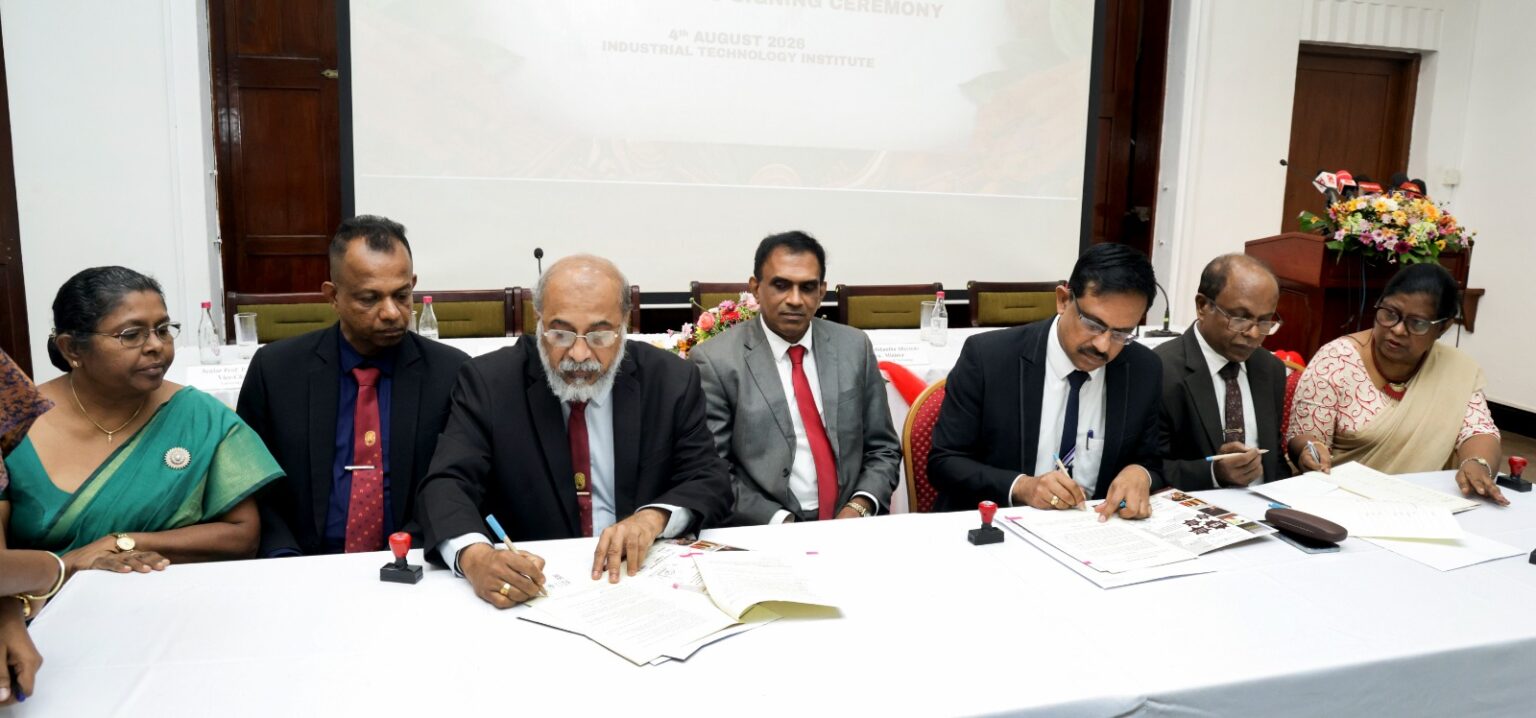
By demonstrating that circular-economy principles can be seamlessly integrated into traditional farming economies, the initiative paves the way for future innovations. Members of the Global Sri Lankan community, agricultural entrepreneurs, and international investors watching from abroad recognize this development as a signal of progressive modernization within the homeland’s export sector.
As the Global Sri Lankan community continues to champion authentic heritage products on the world stage, technological triumphs such as the Zero-Waste Cinnamon Processing Center reinforce the country’s reputation as a forward-thinking hub of sustainable agro-innovation. Through unwavering commitment to research, ecological stewardship, and institutional collaboration, Sri Lanka is successfully bridging its rich agrarian history with a prosperous, technology-driven future.
Source: Scientist.lk – http://scientist.lk/2026/08/05/sri-lanka-launches-first-zero-waste-cinnamon-processing-center-to-boost-agro-exports-through-science-technology/
Full source link: http://scientist.lk/2026/08/05/sri-lanka-launches-first-zero-waste-cinnamon-processing-center-to-boost-agro-exports-through-science-technology/
This article was written based on the source http://scientist.lk/2026/08/05/sri-lanka-launches-first-zero-waste-cinnamon-processing-center-to-boost-agro-exports-through-science-technology/, kindly email us at info@eLanka.com.au if any information needs to be corrected.
At eLanka, we respect the rights of creators. If we have used an image you own and you’d like it removed, please email us at info@elanka.com.au and we’ll handle it promptly.


