
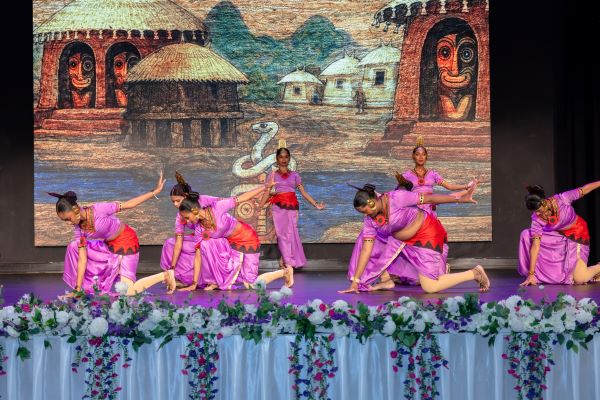
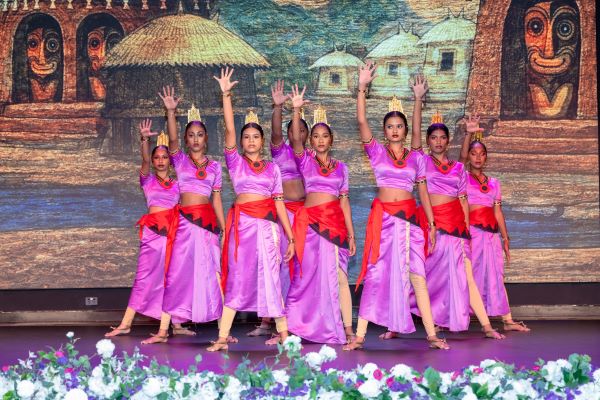
The vibrant tapestry of Western Australia’s multicultural landscape was further enriched recently as graduates from the Perth Sinhala School (Leeming) took to the stage at the NAARI 2026 event. Organized by the Indian Society of Western Australia (ISWA) to celebrate International Women’s Day, the event served as a prestigious platform for cultural exchange and the empowerment of women across the South Asian diaspora. Among the many highlights of the evening, the performance of the “Kuveni” Ballet Act stood out as a profound testament to the endurance of Sri Lankan artistic traditions and the immense talent fostered within the local community.
The performance was more than a mere display of rhythmic movement; it was a sophisticated re-enactment of one of Sri Lanka’s most pivotal historical legends. Under the meticulous choreography and costume design of the renowned Kalakeerthi Dr Ravibandhu Vidyapathy, the dancers brought to life the story of Kuveni, a figure who remains central to the foundational myths of the Sinhalese people. The inclusion of this particular ballet at an event dedicated to womanhood was both intentional and deeply symbolic, highlighting the complex agency of women in the historical narrative of the island.
The Historical and Mythological Context of Kuveni
To fully appreciate the significance of the performance at NAARI 2026, one must delve into the historical chronicles of Sri Lanka, specifically the arrival of Prince Vijaya in the 6th century BCE. According to the Mahavamsa, the great chronicle of Sri Lanka, Kuveni was a princess of the Yaksha tribe, a community that inhabited the island prior to the arrival of North Indian settlers. The legend dictates that Kuveni, possessing supernatural powers, initially attempted to ensnare Vijaya and his seven hundred followers. However, upon being overpowered by the prince, she transitioned from an antagonist to a crucial ally.
It is often noted by historians that the establishment of the first kingdom at Tambapanni would have been an impossibility without the strategic intelligence and local knowledge provided by Kuveni. As the first recorded female figure of authority in the island’s history, her character represents a confluence of power, sacrifice, and ultimate tragedy. By selecting this narrative for a Women’s Day celebration, the Perth Sinhala School and Dr Ravibandhu Vidyapathy underscored the often-overlooked role of women in nation-building and the complex emotional journeys they navigate within patriarchal historical structures.
Artistry and Masterful Choreography
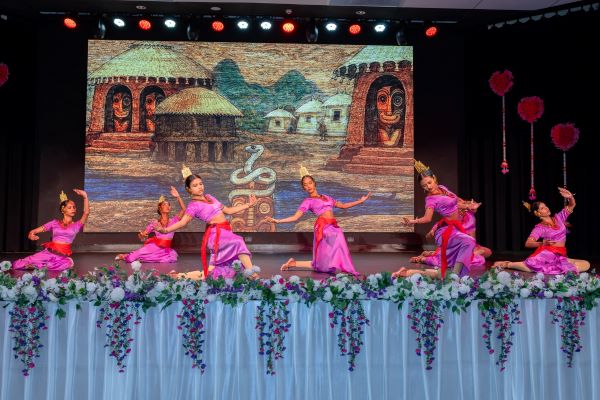
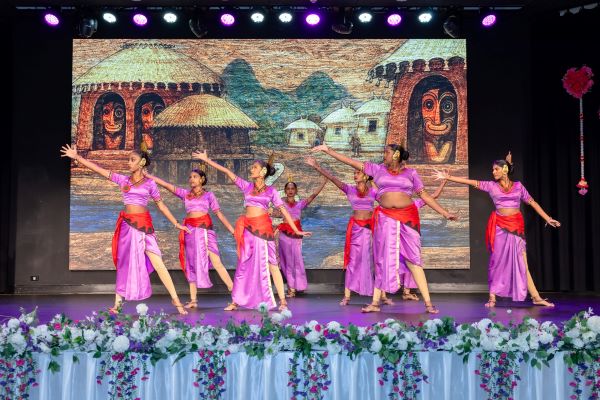
The “Kuveni” Ballet Act presented in Perth was a masterclass in traditional Sri Lankan dance, infused with the contemporary sensibilities for which Dr Ravibandhu Vidyapathy is globally celebrated. As a veteran Kandyan dancer and choreographer, Dr Vidyapathy has spent decades refining the “Kulee” style, which bridges the gap between the rigorous, ritualistic movements of the Kandyan hills and the expressive, narrative-driven requirements of modern stage ballet.
The costumes, designed by Dr Vidyapathy himself, were instrumental in transporting the audience back to the proto-historic era of the island. Intricate beadwork, traditional headpieces, and the vibrant use of crimson and gold served to distinguish the royal yet primal nature of the Yaksha queen. Every gesture, or mudra, performed by the graduates of the Perth Sinhala School was imbued with meaning, depicting Kuveni’s initial ferocity, her subsequent loyalty to Prince Vijaya, and the inevitable sorrow that followed her displacement.
The Role of the Perth Sinhala School (Leeming)
The success of the performance is a direct reflection of the pedagogical excellence at the Perth Sinhala School, located in Leeming. Since its inception in 1997 by the late Mrs Nellie Gunasekera, the school has functioned as a vital cultural artery for the Sri Lankan diaspora in Western Australia. It is the only community language school in the state dedicated specifically to the preservation of the Sinhala language and the propagation of its associated cultural heritage.
The school’s mission extends far beyond the classroom, emphasizing a “three-pillar” approach that integrates language acquisition with skill development and the performing arts. For the graduates who performed the “Kuveni” ballet, the event marked the culmination of years of disciplined training in Sri Lankan drumming and dance. Such achievements are vital in a multicultural society, as they ensure that the second and third generations of Sri Lankan Australians remain connected to their ancestral roots while contributing to the diverse cultural fabric of their adopted home.
Multicultural Synergy: Sri Lanka and India in WA
The staging of a Sri Lankan ballet at an event organized by the Indian Society of Western Australia (ISWA) is a poignant example of the regional solidarity found within the South Asian community in Perth. NAARI, an event that has evolved significantly since its inception, focuses on fostering wellness, entrepreneurship, and artistic expression among women. By inviting the Perth Sinhala School to participate, ISWA demonstrated the shared heritage and mutual respect that exists between the Indian and Sri Lankan communities.
Events like NAARI 2026 provide a unique space where “women heal each other,” as described by previous organizers. The inclusion of the Kuveni story, a narrative that inherently involves the meeting of an Indian prince and a Sri Lankan princess, offered a historical mirror to the modern-day collaboration on display at the Indian Society’s celebration. It highlighted the shared cultural grammar of South Asian dance, where rhythm and storytelling are used as universal languages to transcend borders.
eLanka’s Commitment to Community Excellence
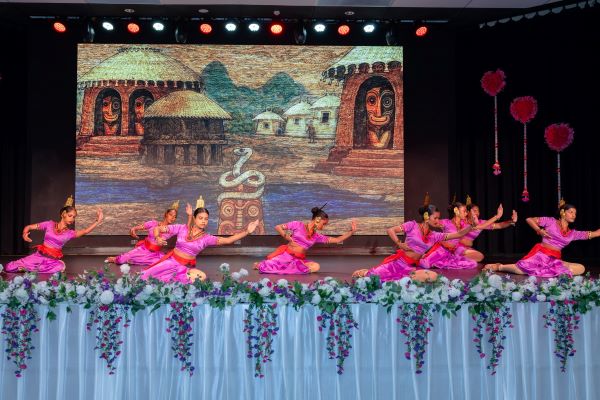
At eLanka, our mission has always been to celebrate positive stories that bring the global Sri Lankan community together. The achievement of the Perth Sinhala School graduates is a shining example of the “Good News Stories” we strive to highlight. By showcasing their talent on a platform like NAARI 2026, these young dancers have not only honored their heritage but have also elevated the profile of Sri Lankan arts on the international stage.
We encourage all members of the community to support local initiatives like the Perth Sinhala School. Whether through attending performances, enrolling children in cultural programs, or supporting community events, your involvement ensures that these rich traditions continue to flourish for generations to come. The “Kuveni” ballet was a reminder that while we may live thousands of miles from our ancestral home, the stories and spirits of our heritage remain vibrant and powerful within us.
Looking Forward
As we reflect on the success of NAARI 2026, it is clear that the future of Sri Lankan performing arts in Australia is in capable hands. The dedication of the students, the vision of the Perth Sinhala School, and the artistic guidance of figures like Dr Ravibandhu Vidyapathy are instrumental in maintaining the authenticity of our cultural expressions. We look forward to seeing more such collaborations and performances that highlight the profound depth of Sri Lankan history and the brilliance of our diaspora.
For those interested in exploring more about the Sri Lankan community in Australia, eLanka remains your primary bridge to news, events, and business listings. From our Business Directory to our comprehensive Event Listings, we are here to support and celebrate every milestone of our community.
Source: https://www.facebook.com/share/p/1DxqmjaY7x/
This article was written based on the source https://www.facebook.com/share/p/1DxqmjaY7x/, kindly email us at info@eLanka.com.au if any information needs to be corrected.
At eLanka, we respect the rights of creators. If we have used an image you own and you’d like it removed, please email us at info@elanka.com.au and we’ll handle it promptly.


