
In an era defined by rapid macroeconomic shifts and the imperative for sustainable fiscal consolidation, structural impediments within state institutions have frequently hindered the rapid deployment of capital in developing economies. Addressing this critical bottleneck with pragmatic institutional reform, the Free Trade Zone Manufacturers Association (FTZMA) has formally submitted a comprehensive proposal to establish a single national “no wrong door” facilitation window at the Board of Investment (BOI) of Sri Lanka. Designed to accelerate export-oriented and foreign exchange-earning investment proposals, this pioneering initiative seeks to eliminate bureaucratic inertia, streamline regulatory approvals, and foster a frictionless environment where commercially viable ideas are transformed into tangible economic gains.
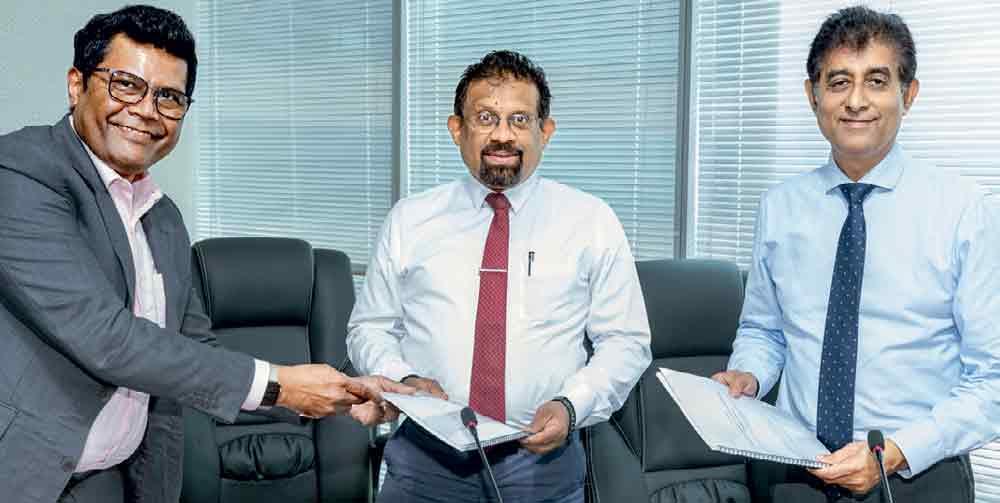
The formal proposal was unanimously endorsed by the FTZMA Executive Committee and subsequently presented to key institutional leaders, including BOI Chairman Duminda Hulangamuwa and BOI Director General Dr. Sulakshana Jayawardena. By bridging the chasm between private-sector ingenuity and state-level administration, the proposed framework aims to redefine how investment proposals are evaluated, coordinated, and executed across government departments.
Deconstructing the ‘No Wrong Door’ Architectural Framework
At the heart of the FTZMA’s strategic blueprint is the establishment of a centralized “National Facilitation and Activation Window” hosted within the premises of the BOI. Although anchored at the BOI, the window is deliberately conceived as a national entry point rather than an isolated institutional desk. It is engineered to serve investors, domestic industrialists, corporate professionals, academic institutions, industry bodies, and the wider Global Sri Lankan community seeking to channel productive capital into the domestic economy.
The foundational philosophy underpinning the mechanism is elegantly simple yet profoundly impactful: no worthwhile commercial proposal should be allowed to languish or fail merely because its proponent inadvertently knocked on the wrong administrative door. Under this operational architecture, if an submitted proposal falls outside the direct statutory mandate of the BOI, the institution is tasked not with dismissing the application, but rather with formally referring it to the appropriate state regulatory authority while maintaining active oversight and coordination until a definitive response is secured.
This proactive stance represents a significant departure from traditional bureaucratic silos, replacing inter-departmental friction with synchronized institutional collaboration.
Transforming Red Tape into Foreign Exchange
For decades, economic commentators and industrial stakeholders have lamented the protracted approval cycles that frequently accompany major investment inflows in South Asian markets. The FTZMA framework confronts this challenge head-on by redefining the boundaries of government responsibility. According to the association’s guiding tenets, the primary function of the state apparatus is to “open the path” and dismantle unnecessary regulatory barriers, allowing the innate energy, capital, and resourcefulness of the private sector to drive implementation.
Crucially, the proposed window is explicitly structured as a results-oriented mechanism rather than a grievance redressal or complaints desk. Proponents submitting initiatives through this channel are required to present fully articulated, workable solutions specifying the exact implementers, the private resources at disposal, and the precise government decisions or regulatory clearances required.
Furthermore, accountability within the framework is anchored in strict, measurable outcomes. The association maintains that the ultimate success of the initiative must be evaluated strictly on the basis of actual foreign exchange received and confirmed through the formal banking system, rather than through superficial metrics such as the sheer volume of proposals reviewed, the frequency of inter-ministerial meetings convened, or headline-grabbing investment announcements that fail to materialize on the ground.
Timelines, Accountability, and Supervised Pilot Projects
To ensure operational efficacy and prevent proposals from stalling in endless administrative loops, the FTZMA proposal incorporates rigorous time-bound commitments. Every complete and compliant submission routed through the facilitation window will be assigned a dedicated BOI case officer responsible for shepherding the file through necessary clearances.
Under the proposed guidelines, applicants can expect to receive a preliminary decision or structured response within a maximum timeframe of one month. For straightforward proposals that require minimal cross-agency alignment, decisions could potentially be finalized within a matter of days. In instances where innovative proposals involve novel regulatory parameters or untested commercial concepts, the framework allows for the establishment of limited, supervised pilot projects. These controlled trials enable regulators to assess operational viability and risk mitigation in real-time, thereby fostering an environment conducive to technological and financial innovation.
Catalysing Engagement Across the Global Sri Lankan Community
The strategic vision of the FTZMA framework extends far beyond domestic industrial circles, offering a reliable, transparent conduit for Sri Lankan expatriates and international investors who wish to contribute to the nation’s economic resurgence. Members of the Global Sri Lankan community, possessing diverse professional expertise, international capital reserves, and global market linkages, have frequently expressed a desire to invest in homeland ventures but have historically been deterred by procedural complexities.

By establishing a centralized, accountable entry point under the leadership of BOI Chairman Duminda Hulangamuwa and BOI Director General Dr. Sulakshana Jayawardena, the ‘No Wrong Door’ pathway instils renewed confidence among prospective investors. It signals a decisive institutional commitment to transparency, efficiency, and partnership, ensuring that capital earmarked for export expansion, technological advancement, and foreign exchange generation is welcomed and expeditiously processed.
Conclusion: A Pivotal Milestone for National Economic Resilience
The introduction of the ‘No Wrong Door’ pathway by the Free Trade Zone Manufacturers Association represents a watershed moment in Sri Lanka’s economic governance. By systematically replacing bureaucratic obscurity with structured accountability, clear timelines, and cross-institutional coordination, the initiative addresses the root causes of investment inertia.
As the proposal undergoes formal evaluation and integration by state authorities, its successful implementation promises to unlock dormant economic potential, fortify foreign exchange reserves, and establish a benchmark for institutional agility in the region. Through such visionary reforms, Sri Lanka continues to pave a resilient, export-driven pathway toward sustained macroeconomic prosperity.
Source: Daily Mirror – https://www.dailymirror.lk/business-news/FTZMA-pitches-no-wrong-door-pathway-to-boost-forex-earnings/273-347406
This article was written based on the source https://www.dailymirror.lk/business-news/FTZMA-pitches-no-wrong-door-pathway-to-boost-forex-earnings/273-347406, kindly email us at info@eLanka.com.au if any information needs to be corrected.
At eLanka, we respect the rights of creators. If we have used an image you own and you’d like it removed, please email us at info@elanka.com.au and we’ll handle it promptly.


