
In an era where the global economic landscape is increasingly defined by the principles of the circular economy and sustainable resource management, a pioneering Sri Lankan enterprise is demonstrating how environmental liabilities can be systematically transformed into lucrative export assets. The establishment of Yesol Lanka, a Board of Investment (BOI)-approved venture located in Madurankuliya, Puttalam, represents a significant milestone in the nation’s industrial evolution, specifically within the realm of marine-ingredient valorisation. By repurposing discarded fish heads, viscera, and skins, materials that were once considered burdensome waste, into high-quality animal feed ingredients, the company has successfully tapped into a multi-billion dollar global market while simultaneously providing a robust solution to coastal pollution.
The genesis of this innovative project is deeply rooted in the international experience of its founder, Mr. Vijitha Kumara Rajapaksa. Having spent a decade in South Korea as an expatriate worker within the Hantech Group, a prominent industrial conglomerate operating forty-three factories and fifteen large-scale production plants across Southeast Asia, Mr. Rajapaksa acquired profound technical expertise in the processing of fish waste. Upon his return to Sri Lanka, he sought to implement these advanced methodologies, motivated by a vision to elevate the local fisheries sector and generate essential foreign exchange for the national treasury.
A Strategic Investment in Madurankuliya
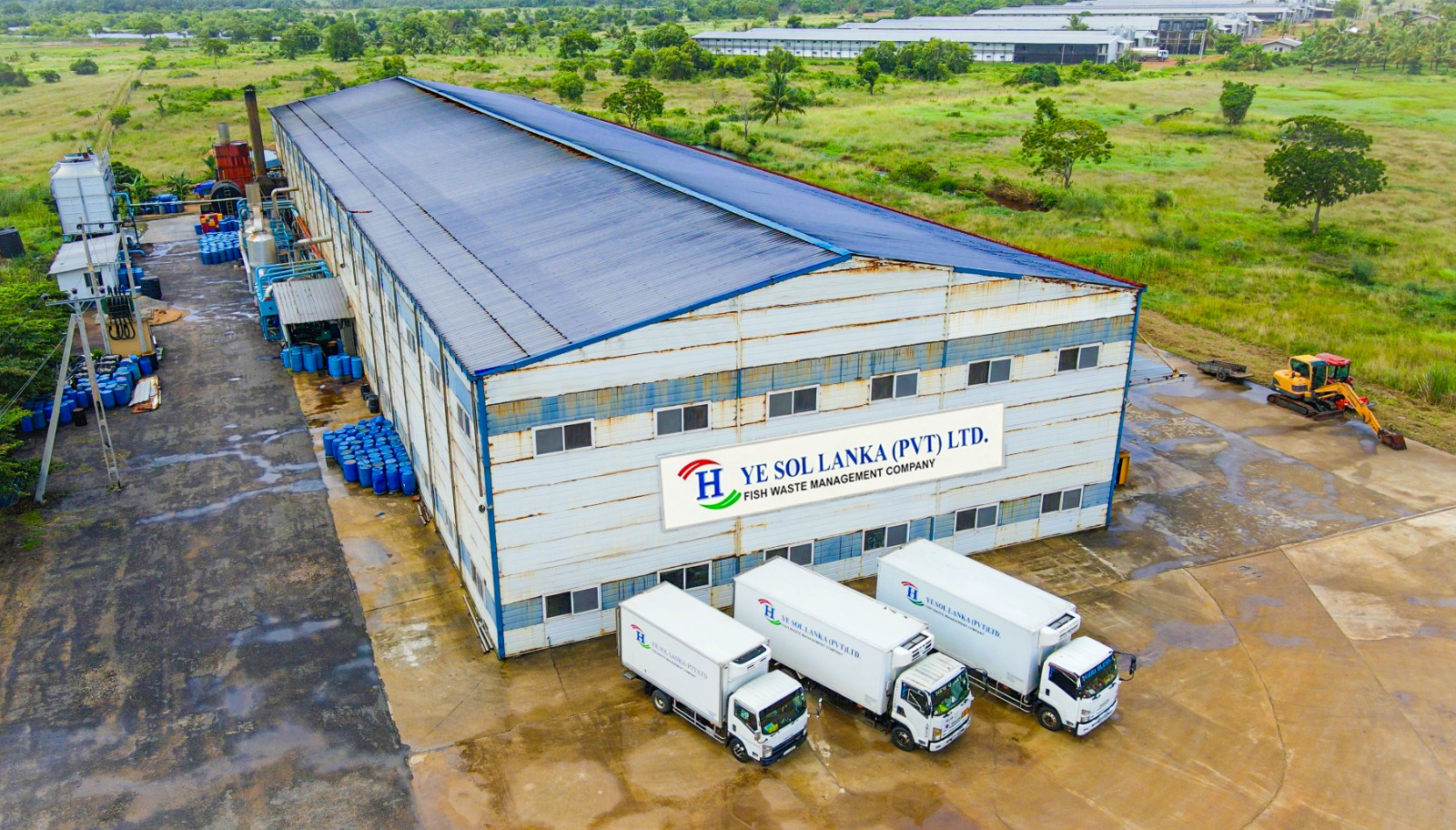
The facility, which spans an expansive 50-acre site in the Puttalam district, was established with an initial investment of approximately US$ 3 million. This strategic location was selected due to its proximity to major fishing hubs, ensuring a consistent supply of raw materials. Currently, Yesol Lanka possesses the industrial capacity to process up to 100 metric tons of fish waste daily, a figure that is instrumental when considering that the island-wide daily collection ranges between 50 and 70 metric tons.
During the project’s inception, the proposal was meticulously evaluated by the Board of Investment. Ms. Tamari Batuwanthudawa, the Senior Deputy Director of the BOI, played a pivotal role in the expedited approval process, recognising the multifaceted benefits the venture would afford the nation. These benefits encompass the mitigation of environmental degradation, the generation of direct and indirect employment, and the creation of a new revenue stream for the local fishing community. Before the emergence of Yesol Lanka, such waste was frequently discarded into the sea or left to decay in open markets, incurring significant disposal costs for local authorities and posing a threat to marine ecosystems.
Economic Impact and Global Market Integration
The economic repercussions of Yesol Lanka’s operations are substantial, with the company currently exporting between 30,000 and 35,000 metric tons of fish meal, fish oil, and fish paste on an annual basis. These exports generate a consistent inflow of foreign currency, estimated at approximately US$ 2 million to US$ 2.5 million per annum. Such figures are indicative of the untapped potential inherent in Sri Lanka’s marine resources, particularly when one considers that the country presently exports less than 3% of its total catch as processed marine ingredients.
The global demand for these products is driven by the rapid expansion of the aquaculture and premium pet food industries. The global fishmeal and fish oil market was valued at nearly US$ 9.9 billion in 2026, with projections suggesting a rise to US$ 19.1 billion by 2036. By securing high-profile international clients, such as the CP Company of Vietnam, a world leader in shrimp farming, Yesol Lanka has firmly positioned Sri Lanka within this high-growth global supply chain.

Furthermore, the operation provides a critical safety net for the local fishing community. Fishermen and waste collectors are now remunerated at a rate of Rs. 20–30 per kilogram for materials that were previously of zero economic value. This collaborative model not only enhances the livelihoods of those within the Sri Lankan business directory network but also fosters a more disciplined approach to waste management within the industry.
Commitment to Quality and Sustainability
To ensure compliance with stringent international standards, Yesol Lanka maintains a state-of-the-art in-house laboratory where every production batch is subjected to rigorous quality control testing. The processing involves specialized machinery capable of handling 15 tons of waste per cycle at temperatures exceeding 120°C, a process that ensures the output is free from pathogens and suitable for high-end animal nutrition.
Equally noteworthy is the company’s attainment of 100% Green Project status. This certification was achieved through the implementation of sustainable logistics practices, including the replacement of traditional, environmentally harmful export packaging with recyclable Intermediate Bulk Container (IBC) boxes and plastic pallets. Such initiatives align with the broader goals of the National Export Development Plan, which emphasizes the necessity of sustainable branding to remain competitive in discerning Western markets.
A Paradigm Shift for Future Generations
The success of Yesol Lanka serves as a compelling case study for the Global Sri Lankan community and aspiring local entrepreneurs alike. Mr. Rajapaksa has frequently expressed his desire to see more young Sri Lankans move beyond conventional employment and embrace innovative, export-oriented ventures. The transformation of an “environmental burden” into a source of national wealth is a testament to the power of technical knowledge combined with an unwavering commitment to national development.
As Sri Lanka continues to navigate its path toward economic stability and growth, the role of value-addition in traditional sectors cannot be overstated. Projects such as this reinforce the island’s burgeoning profile as a destination for circular-economy investments. By leveraging advanced technology and adhering to global quality benchmarks, Sri Lankan enterprises are proving that even the most overlooked materials can become a cornerstone of the nation’s export strategy.
For those interested in the broader landscape of Sri Lankan innovation and community achievements, further insights can be found in our Good News Stories section. We encourage all members of our community to support these local industries that are making a tangible difference on the global stage.
Source: https://bizenglish.adaderana.lk/from-discarded-fish-waste-to-dollar-earnings/
This article was written based on the source https://bizenglish.adaderana.lk/from-discarded-fish-waste-to-dollar-earnings/, kindly email us at info@eLanka.com.au if any information needs to be corrected.
At eLanka, we respect the rights of creators. If we have used an image you own and you’d like it removed, please email us at info@elanka.com.au and we’ll handle it promptly.


