
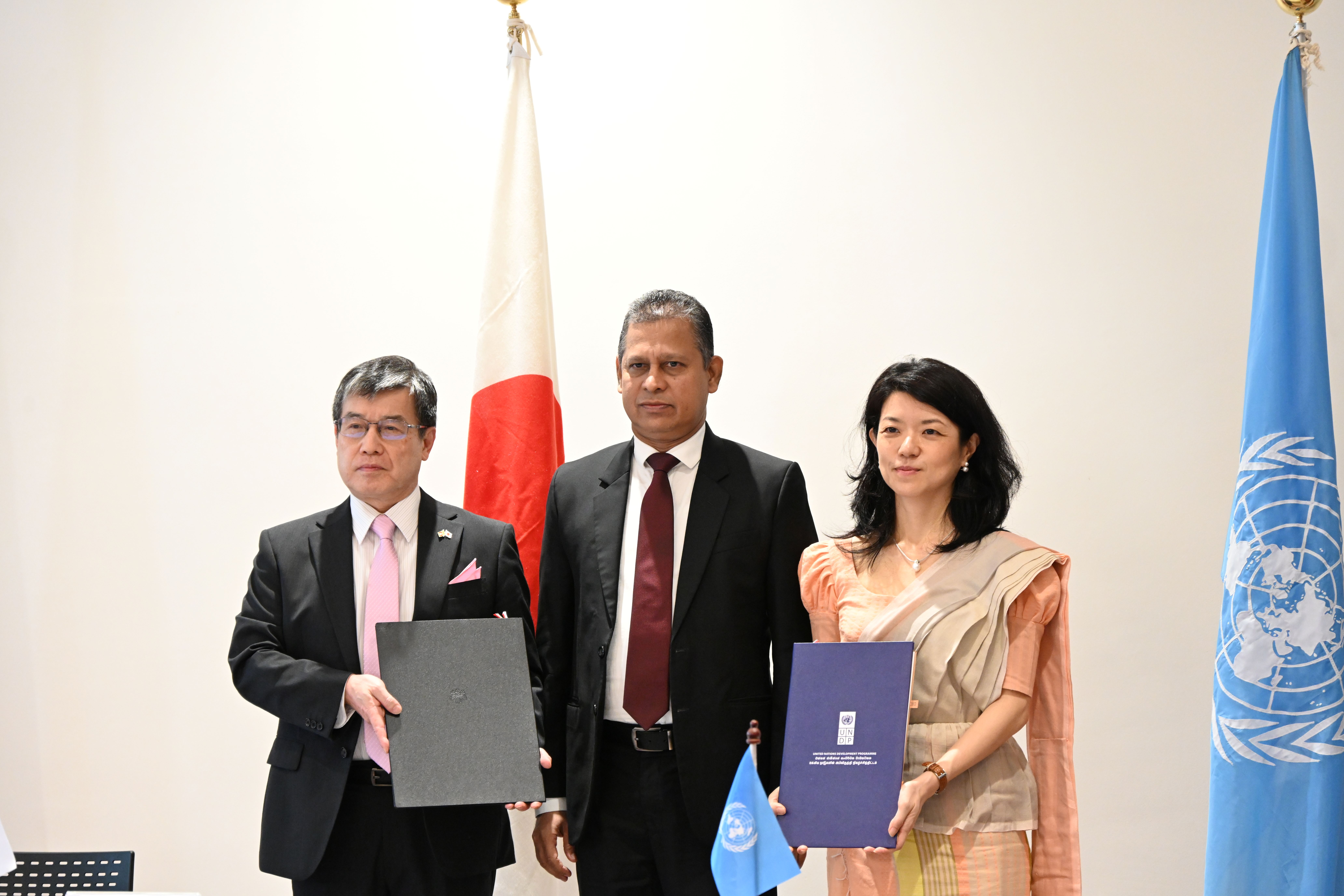
In a significant stride towards long-term resilience and community empowerment, the Government of Japan and the United Nations Development Programme (UNDP) have officially launched a comprehensive disaster-recovery initiative aimed at revitalising the Central Province of Sri Lanka. Formally signed on 10 June 2026, the “Project for Disaster Waste Clearance and Rehabilitation of Community Facilities through Participatory Approach in Communities Affected by the Cyclone” represents a robust commitment to the “Build Back Better” philosophy. This ambitious undertaking is specifically designed to address the extensive damage wrought by Cyclone Ditwah, which impacted the island nation in late 2025, leaving a trail of infrastructure disruption and environmental challenges in its wake.
The project, backed by a generous contribution of 208 million Japanese Yen (approximately USD 1.33 million) from the Government of Japan, is set to focus its primary efforts on the districts of Kandy, Matale, and Nuwara Eliya. These regions, renowned for their breathtaking landscapes and cultural significance, were amongst the hardest hit by the cyclone’s fury, experiencing severe landslides, flooding, and a staggering accumulation of disaster-related debris. By targeting these areas, the initiative seeks to restore not only the physical landscape but also the social fabric and economic stability of the affected communities.
A Response to the Impact of Cyclone Ditwah
The genesis of this partnership lies in the aftermath of Cyclone Ditwah, a natural disaster of significant magnitude that affected an estimated 1.7 million people across Sri Lanka. The Central Province, with its unique topography, faced distinct challenges as heavy rainfall triggered landslides that blocked arterial roads and damaged essential community hubs. The volume of disaster waste, ranging from fallen trees and vegetation to destroyed building materials, created an immediate environmental hazard and hindered the restoration of basic services.
In response to this crisis, the Japanese government and the UNDP have structured a recovery model that prioritises immediate clearance alongside sustainable, long-term development. The project is expected to provide direct benefits to approximately 228,500 individuals, with a further 700,000 residents benefiting indirectly from improved infrastructure and enhanced municipal services. This dual-layered impact ensures that while the immediate scars of the cyclone are addressed, the foundation for a more resilient future is simultaneously laid.

The “Build Back Better” Philosophy in Action
Central to this initiative is the concept of “Building Back Better,” a global standard in disaster recovery that advocates for rebuilding in a manner that reduces future vulnerability. Rather than simply returning to the pre-disaster state, the project aims to integrate modern technology and sustainable practices into the recovery process. This approach is instrumental in ensuring that the communities of Kandy, Matale, and Nuwara Eliya are better prepared for the increasingly unpredictable weather patterns associated with global climate shifts.
One of the most innovative components of this project is the deployment of electric three-wheelers for disaster waste management. By moving away from traditional, fossil-fuel-dependent vehicles, the initiative introduces a cleaner, more efficient method for collecting and managing light debris and recyclable materials. This not only aids in the rapid clearance of post-cyclone waste but also aligns with Sri Lanka’s broader goals of transitioning towards sustainable transport and reducing the carbon footprint of local government operations.
Sustainable Waste Management and Environmental Stewardship
The management of disaster waste is often an overlooked aspect of recovery, yet it is vital for preventing disease outbreaks and restoring the aesthetic and ecological health of a region. The “Project for Disaster Waste Clearance” adopts a participatory approach, involving local community members in the identification, sorting, and disposal of waste. This methodology ensures that the process is inclusive and that the benefits of the project, such as temporary employment opportunities, reach those who need them most.
The introduction of electric three-wheelers serves as a pilot for a more permanent shift in how local councils in the Central Province manage municipal solid waste. By demonstrating the efficacy and cost-effectiveness of these vehicles in a challenging post-disaster context, the project provides a blueprint for other districts to follow. It is a testament to the forward-thinking nature of the Japan-UNDP partnership that they are utilizing a recovery fund to catalyse technological advancement in rural and semi-urban settings.
Rehabilitating Vital Community Infrastructure
Beyond waste management, the project places a heavy emphasis on the rehabilitation of multi-purpose community facilities. These buildings often serve as the heartbeat of local villages, housing essential services such as primary healthcare clinics, preschools, and social support centres. During the height of the cyclone, many of these structures were either damaged or repurposed as emergency shelters, leading to a prolonged disruption of their original functions.
The rehabilitation process involves structural repairs, the installation of resilient roofing, and the improvement of sanitation and water facilities. By restoring these hubs, the project ensures that the most vulnerable members of society, including children, the elderly, and those requiring medical attention, can once again access vital services in a safe and secure environment. The participatory nature of the rehabilitation work also fosters a sense of ownership amongst the residents, who are encouraged to take an active role in the physical renewal of their neighbourhoods.
Social Consciousness and Inclusive Recovery
A hallmark of this Japan-UNDP initiative is its deep-rooted social consciousness. There is a deliberate and concerted effort to engage women and vulnerable groups in all stages of the recovery process. Recognising that women are often disproportionately affected by natural disasters, the project provides them with opportunities to lead community-based waste management committees and participate in the planning of infrastructure projects.
This focus on inclusivity ensures that the recovery is equitable and that the benefits of the Japanese funding are distributed fairly across the diverse social landscape of the Central Province. By providing livelihood opportunities through the “Build Back Better” framework, the project helps families regain their financial independence, which is a crucial step in the overall healing process following the trauma of Cyclone Ditwah.
A Partnership Built on Long-Standing Friendship
The collaboration between the Government of Japan and the UNDP in Sri Lanka is a testament to a long-standing history of mutual respect and international cooperation. Japan has consistently been a primary partner in Sri Lanka’s development journey, offering technical expertise and financial support during times of both peace and crisis. This latest project is an extension of that enduring bond, reflecting a shared vision for a stable, prosperous, and resilient Sri Lanka.
His Excellency, the Ambassador of Japan to Sri Lanka, noted during the signing ceremony that Japan remains committed to assisting the people of Sri Lanka in their efforts to mitigate the impacts of climate change. Similarly, the UNDP resident representative emphasised the importance of this project in bridging the gap between immediate humanitarian aid and long-term sustainable development. Together, these organisations are providing the resources and the strategic framework necessary for the Central Province to emerge stronger than ever before.

eLanka’s Commitment to Sharing Positive Stories
As Australia’s premier online web portal for the Sri Lankan community, eLanka is proud to share these stories of hope and progress. Our mission has always been to act as a primary bridge connecting Sri Lankans living abroad with the heart of their heritage. News of such international cooperation and local resilience is vital for our members in Australia, the UK, Canada, and beyond, as it highlights the positive strides being made in their homeland.
Whether it is through our Business Directory, our News and Articles section, or our dedicated community platforms, eLanka remains committed to celebrating the achievements and the resilience of Sri Lankans worldwide. We believe that by highlighting initiatives like the Japan-UNDP “Build Back Better” project, we can inspire a sense of pride and social consciousness within our global network.
Conclusion: A Bright Future for the Central Province
The “Project for Disaster Waste Clearance and Rehabilitation of Community Facilities” is more than just a reconstruction effort; it is a promise of a brighter, more sustainable future for the people of Kandy, Matale, and Nuwara Eliya. Through the innovative use of electric vehicles, a focus on community participation, and a commitment to inclusive development, this partnership is setting a new standard for disaster recovery in the region.
As the physical debris is cleared and the community centres are reopened, the lasting legacy of this project will be the increased resilience of the Central Province. The people of these districts have shown remarkable strength in the face of adversity, and with the support of international partners like Japan and the UNDP, they are truly building back better.
This article was written based on the source https://www.undp.org/srilanka/press-releases/sri-lanka-and-japan-partner-accelerate-recovery-through-disaster-waste-management-and-community-rehabilitation-initiative, kindly email us at info@eLanka.com.au if any information needs to be corrected.
At eLanka, we respect the rights of creators. If we have used an image you own and you’d like it removed, please email us at info@elanka.com.au and we’ll handle it promptly.


