
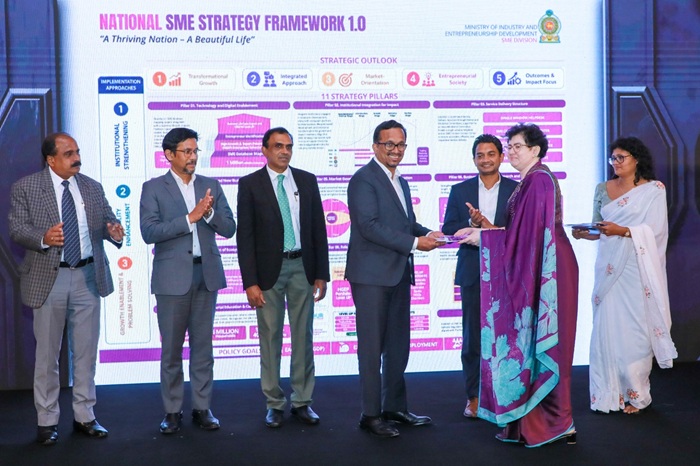
The landscape of the Sri Lankan economy is poised for a significant transformation following the official unveiling of the “SME Nexus” National SME Strategy Framework 2026. This comprehensive and ambitious initiative, designed to serve as the primary catalyst for small and medium enterprise empowerment, was introduced on Wednesday, 13 May 2026. The framework represents a pivotal moment in the nation’s pursuit of robust economic growth, as it addresses the structural impediments that have historically hindered the expansion of the SME sector, a sector that is universally recognised as the backbone of the island’s commercial vitality.
In a formal ceremony held under the patronage of the subject Minister, Sunil Handunneththi, and Deputy Minister, Chathuranga Abeysinghe, the government articulated a vision that transcends mere subsistence, aiming instead for a flourishing, export-oriented entrepreneurial ecosystem. The “SME Nexus” framework is not merely a policy document but a strategic roadmap intended to guide the nation towards a “Thriving Nation – A Beautiful Life.” By focusing on high-growth potential and digital integration, the initiative seeks to elevate local businesses to meet international standards, thereby enhancing their competitiveness within the Global Value Chain (GVC).
The Critical Role of SMEs in Sri Lanka
To appreciate the magnitude of this framework, one must first consider the statistical significance of small and medium enterprises within the Sri Lankan context. Currently, the SME sector comprises more than 75% of all registered businesses in the country, highlighting its role as the primary engine of private-sector activity. Furthermore, these enterprises contribute a substantial 52% to the national Gross Domestic Product (GDP) and are responsible for the employment of approximately 45% of the national workforce. Consequently, any strategic intervention within this sector has the potential to yield profound ripple effects across the entire economic spectrum.
Despite their importance, many Sri Lankan entrepreneurs have faced persistent challenges, ranging from limited financial access to antiquated technological infrastructure. The “SME Nexus” framework is specifically engineered to dismantle these barriers, providing a “single-window” service structure that simplifies the complexities of business registration and institutional interaction. For members of the global community looking for Sri Lankan News Australia, such developments are instrumental in understanding the shifting economic dynamics of their heritage country and the emerging opportunities for investment and collaboration.

Eleven Strategic Pillars: A Comprehensive Approach
The “SME Nexus” framework is built upon eleven distinct strategic pillars, each meticulously designed to address a specific facet of enterprise development. These pillars form a cohesive structure that ensures no aspect of the entrepreneurial journey is neglected.
- Technological and Digital Empowerment: This pillar introduces an integrated SME data platform and a suite of digital business tools, ensuring that even the smallest enterprises can leverage modern technology to enhance their operational efficiency.
- Institutional Integration: By aligning all state institutions involved in enterprise development toward a unified national objective, the framework eliminates the bureaucratic redundancies that often stifle innovation.
- Service Delivery Structure: The establishment of “SME Connect” call centres and “single-window” service centres is intended to provide a seamless interface between the government and the entrepreneur.
- Incubation and Startup Support: Recognising that the initial stages of a business are often the most precarious, the framework simplifies startup procedures to foster a more vibrant culture of new enterprise creation.
- Market Development and Value Chain Integration: This is perhaps one of the most critical pillars, as it focuses on connecting local products to global markets, ensuring that Sri Lankan craftsmanship and innovation are recognised on the world stage.
- Business Intelligence and Research: Through the SIBA unit, entrepreneurs will gain access to data-driven decision-making tools and sophisticated market research, allowing them to navigate complex market trends with greater confidence.
- Recognition of Ecosystem Partners: The framework acknowledges the vital role played by banks, chambers of commerce, and public officials, implementing a system to evaluate and reward their contributions to the SME ecosystem.
- Relationship Management: In a move towards a more personalised support system, development officers will be trained as “Relationship Officers,” providing direct guidance and mentorship to entrepreneurs.
- Financial Access and Growth Fund: Improving credit readiness and establishing a dedicated “Growth Fund” will provide the necessary capital for businesses in priority sectors to scale their operations.
- Entrepreneurship Education and Culture: To ensure the long-term sustainability of the sector, the framework promotes entrepreneurial thinking within the national education system, from schools to universities.
- Policy and Regulatory Reforms: Finally, the framework seeks to reform the outdated laws and regulations that have historically hindered enterprise growth, creating a more business-friendly legal environment.
Fostering a Culture of Innovation
The emphasis on mentorship and education within the “SME Nexus” framework represents a shift from traditional, top-down bureaucratic management to a more collaborative and supportive model. By training “Relationship Officers” to act as mentors rather than mere administrators, the government is fostering a more intimate and effective support network. This human-centric approach is designed to guide entrepreneurs through the nuances of modern business management, from financial planning to brand development.
Furthermore, the integration of entrepreneurship into the school curriculum is a far-sighted strategy aimed at cultivating a generation of job creators rather than job seekers. This cultural shift is essential for the long-term economic stability of the nation, as it encourages innovation and self-reliance from a young age. For the Sri Lankan Community Portal audience, these educational reforms are a sign of a maturing economy that values intellectual capital and creative enterprise.
Global Integration and Export Potential
A primary objective of the “SME Nexus” framework is to facilitate the transition of local businesses from domestic markets to the global arena. The focus on Global Value Chain (GVC) integration is particularly relevant in an increasingly interconnected world. By providing SMEs with the tools to meet international quality standards and the market intelligence to identify niche opportunities abroad, the framework aims to significantly increase the nation’s export earnings.
This global outlook is complemented by the “Growth Fund,” which is specifically targeted at priority sectors with high export potential. Whether it be in the realms of sustainable agriculture, high-tech manufacturing, or creative services, the framework provides a structured pathway for Sri Lankan businesses to thrive internationally. This is an area where the global community can play a vital role, by serving as a bridge for local products entering foreign markets. Businesses listed in the eLanka Business Directory are already demonstrating this potential, showcasing the versatility and craftsmanship of Sri Lankan entrepreneurs to a global audience.
Observations and Modern Day Outlook
As Sri Lanka navigates the complexities of the mid-2020s, the “SME Nexus” framework arrives at a critical juncture. The goal of tripling the national economy to $300 billion is undoubtedly ambitious, yet it is rooted in the practical reality that a strengthened SME sector is the most viable path toward such a milestone. The emphasis on digital tools and “single-window” services reflects a modern understanding of the speed at which modern business must operate.
The success of this framework will ultimately depend on the efficacy of its implementation and the willingness of the entrepreneurial community to embrace these new resources. However, the initial signs are promising, as the framework offers a holistic and integrated approach that was previously absent from national policy. At eLanka, we remain committed to highlighting these positive developments and providing a platform where Sri Lankan businesses, both local and international, can connect and prosper.
Whether you are an aspiring entrepreneur in Colombo or a seasoned business owner in Sydney, the “SME Nexus” framework represents a new chapter of opportunity. We encourage our readers to stay informed and engaged with these developments, as the growth of the SME sector is inextricably linked to the prosperity of the entire Sri Lankan community worldwide.
This article was written based on the source https://www.newswire.lk/2026/05/14/sme-nexus-national-strategic-framework-for-small-and-medium-enterprises-unveiled/, kindly email us at info@eLanka.com.au if any information needs to be corrected.
At eLanka, we respect the rights of creators. If we have used an image you own and you’d like it removed, please email us at info@elanka.com.au and we’ll handle it promptly.


