
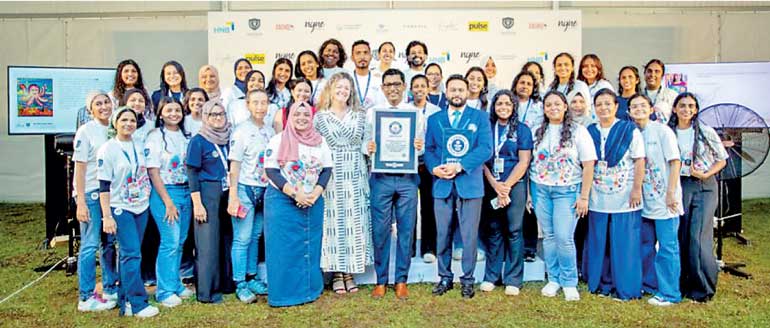
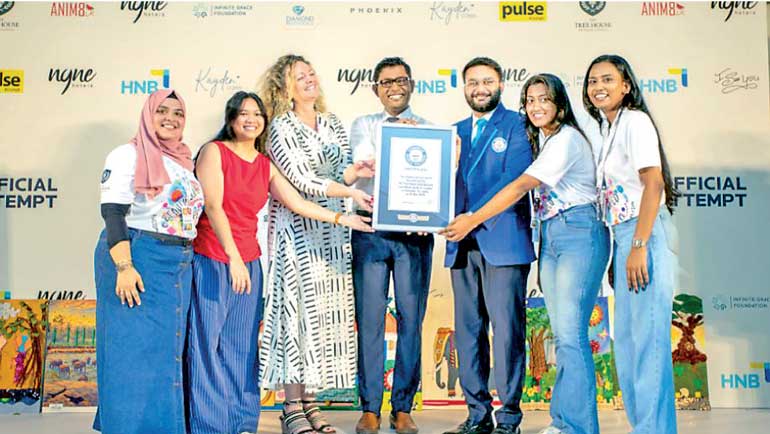
In a monumental display of community spirit and creative advocacy, Sri Lanka has officially secured a place in the prestigious annals of the Guinness World Records. The achievement, centred around the creation and installation of the “Merak 2026” sensory board, marks a significant milestone in the nation’s journey toward fostering a more inclusive and understanding society for neurodivergent individuals. Unveiled at the iconic Bandaranaike Memorial International Conference Hall (BMICH) in Colombo, the board spans a remarkable 60 metres, effectively becoming the world’s longest sensory board ever recorded.
This initiative was not merely a pursuit of a title but served as a sophisticated vehicle for autism advocacy and public education. Orchestrated by The Tree House International and its dedicated charity arm, Merak, the project represents the culmination of years of meticulous planning, artistic collaboration, and a profound commitment to raising awareness about the lived experiences of those on the autism spectrum. By weaving together elements of art, sustainability, and education, the organisers have succeeded in creating a tangible bridge between the public and the complexities of sensory processing.
The Vision Behind Merak 2026
The genesis of Merak 2026 can be traced back to the visionary leadership of Dr. Anton James, the Founder and Director of The Tree House International. Recognising that traditional methods of advocacy often struggle to maintain public engagement, Dr. James and his team sought to create an interactive experience that would demand attention through its sheer scale and tactile complexity. The term “Merak,” which conveys a sense of wonder and the pleasure derived from simple acts, perfectly encapsulates the essence of the project, finding beauty and connection through sensory exploration.
Developing a concept that would meet the stringent criteria set by Guinness World Records was a process that spanned approximately two and a half years. The team explored various ideas, including attempts to create the largest autism-awareness flag composed of signatures or the highest number of sensory bottles produced in an hour. Ultimately, the sensory board was selected for its measurable impact and its ability to serve as a permanent educational tool. Every centimetre of the 60-metre installation was designed to be measurable, verifiable, and standardised, ensuring that the achievement was as technically sound as it was emotionally resonant.

A Symphony of Textures and Sustainability
One of the most striking aspects of the Merak 2026 sensory board is its composition. Rather than relying solely on commercially available items, the project integrated a vast array of repurposed and natural materials, with a particular emphasis on recycled ocean plastics. This choice highlights a dual commitment to social advocacy and environmental stewardship, suggesting that the path to a better future must be inclusive of both people and the planet.
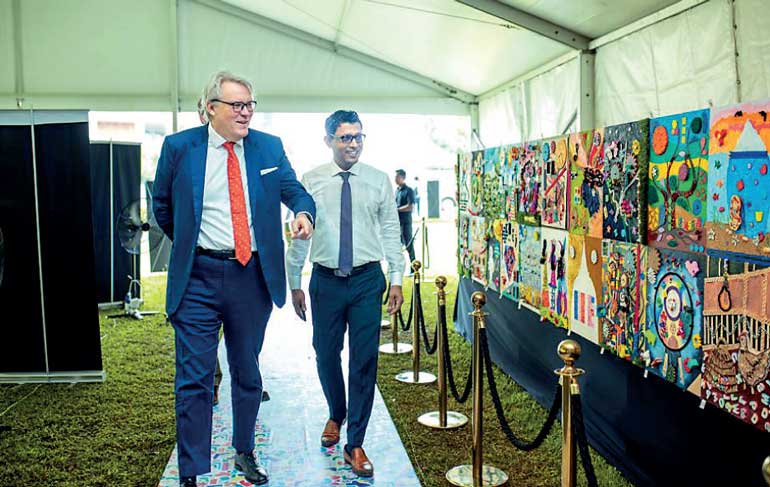
The board is replete with a diverse range of tactile elements, including fidget spinners, industrial bolts, zips, sequins, and various textured fabrics like lace and rough hemp rope. These materials were carefully selected to provide a comprehensive sensory experience, allowing neurotypical individuals to gain a small insight into how sensory inputs are processed by those with autism. The use of recycled plastics specifically served to demonstrate how discarded materials can be transformed into something of immense value and beauty, mirroring the project’s goal of highlighting the untapped potential within the neurodivergent community.
Collaborative Craftsmanship
The sheer scale of the project necessitated an unprecedented level of collaboration across different sectors of Sri Lankan society. The Tree House International acted as the central hub, bringing together artists, university students, international organisations, and local community groups. This collective effort ensured that the board was not the work of a single entity but a representative mosaic of the nation’s creative and empathetic capacity.
Throughout the development phase, various segments of the board were assigned to different groups, each tasked with creating an artistic contribution that reflected a specific aspect of neurodiversity. This process doubled as an educational workshop; many participants began the project with limited knowledge of autism but emerged with a profound understanding of the challenges and strengths associated with the condition. The act of physically constructing the board, attaching beads, smoothing surfaces, and securing zips, fostered a sense of shared responsibility and unity that was palpable during the final assembly at the BMICH.
Educational Impact and Public Engagement
The primary objective of Merak 2026 was to stimulate a national conversation regarding autism and inclusion. By placing the installation in a high-profile venue like the BMICH, the organisers ensured that the message of neurodiversity reached a broad audience, including policymakers, educators, and the general public. The interactive nature of the board encourages visitors to engage physically with the art, moving beyond passive observation to a more active form of learning.
Educational institutions played a pivotal role in this journey, with many schools organising excursions to witness the record-breaking feat. For students, the sensory board served as a practical classroom, illustrating concepts of empathy and social responsibility in a way that textbooks cannot. The project also prepared a substantial “evidence pack” for the Guinness World Record adjudicators, which included independent witness statements, multi-angle video footage, and expert validations, ensuring that the legacy of the board is preserved for future generations.
A Landmark Achievement for Sri Lanka
The formal recognition of Merak 2026 as a Guinness World Record holder is a source of immense pride for the Sri Lankan community, both at home and across the globe. It demonstrates that with innovation and collective action, small nations can lead the way in global social movements. The ceremony at the BMICH, attended by dignitaries and community leaders, was a celebration of resilience and the power of a shared vision.
As the board continues to be displayed, there are plans for segments of it to travel to various galleries, hospitals, and educational centres worldwide. This global reach will ensure that the message of inclusion fostered in Sri Lanka resonates far beyond its borders. The achievement stands as the antithesis of neglect, proving that when the community comes together to support its most vulnerable members, the results can be truly world-changing.
Connecting the Global Sri Lankan Community
At eLanka, we are honoured to share such positive stories that celebrate the ingenuity and compassion of Sri Lankans. Our mission is to serve as a digital bridge, connecting the community across Australia, New Zealand, Canada, the UK, and beyond. Whether it is through our Business Directory, our Event Listings, or our dedicated Property Portal, we strive to provide the tools necessary for our members to thrive and stay connected to their heritage.
We invite all our readers to get involved with eLanka by contributing their own good news stories or by supporting the businesses that advertise on our platform. Together, we can continue to celebrate the achievements of Sri Lankans worldwide and foster a community that is as inclusive and vibrant as the Merak 2026 sensory board itself.
Source: https://www.ft.lk/news/Sri-Lanka-makes-Guinness-world-record-history-with-Merak-2026-sensory-board/56-792052
This article was written based on the source https://www.ft.lk/news/Sri-Lanka-makes-Guinness-world-record-history-with-Merak-2026-sensory-board/56-792052, kindly email us at info@eLanka.com.au if any information needs to be corrected.
At eLanka, we respect the rights of creators. If we have used an image you own and you’d like it removed, please email us at info@elanka.com.au and we’ll handle it promptly.


