
In the bustling epicentre of Colombo, where the modern skyline increasingly reaches toward the clouds, there exists a historic water body that has long served as the city’s environmental and spiritual heart. Beira Lake, an iconic landmark synonymous with the identity of the capital, is poised to undergo a transformative rejuvenation. This significant environmental undertaking has been catalysed by a remarkable act of philanthropy, as renowned engineer and entrepreneur Nahil Wijesuriya has pledged to provide full financial support for a critical technical phase of the lake’s restoration.
The announcement, which marks a pivotal moment in the urban development of Sri Lanka, was formalised during a high-level meeting convened on Thursday, 9th July 2026, at the historic Hunupitiya Gangaramaya Temple. This sacred venue, itself an integral part of the lake’s landscape, served as the backdrop for a collaborative discussion between the public and private sectors, aimed at reclaiming the aesthetic and ecological vitality of this vital urban resource.
A Philanthropic Vision for Urban Restoration
The restoration of Beira Lake is not merely a project of beautification; it is a complex engineering challenge that requires both innovative thinking and substantial capital. Engineer Nahil Wijesuriya’s decision to fund the entirety of the short-term technical project is instrumental in overcoming the financial barriers that often stall large-scale environmental initiatives. His commitment reflects a profound social consciousness and a dedication to the preservation of Sri Lanka’s natural heritage within its urban centres.

The proposed technical intervention involves a sophisticated system of seawater flushing. This method is designed to introduce saline water into the lake’s ecosystem to improve circulation and dilute the high concentrations of pollutants that have accumulated over decades. By leveraging engineering principles to address biological and chemical degradation, the project seeks to provide an immediate reprieve for the lake’s water quality, which has historically suffered from the consequences of rapid urbanisation and industrial runoff.
The Scientific Necessity for Intervention
The urgency of this project is underscored by recent data released by the Sri Lanka Land Development Corporation (SLLDC). Comprehensive water quality assessments conducted at 35 strategic locations across the lake have revealed a sobering reality. The findings indicate high levels of nitrogen, phosphorus, and ammonia, nutrients that, in excess, lead to eutrophication and the depletion of dissolved oxygen. This chemical imbalance is the primary cause of the unpleasant odours and the vibrant green algal blooms that have frequently plagued the lake, rendering it a source of concern rather than a source of pride.
The presence of these contaminants is an antithesis to the vision of a clean, sustainable Colombo. For those in the global Sri Lankan community who remember the lake in various states of neglect, these scientific findings provide a clear justification for the rigorous restoration efforts now being spearheaded by both private and state actors.
A Collaborative Governance Model
The meeting at the Hunupitiya Gangaramaya Temple was chaired by the Chief Incumbent, Venerable Dr Kirinde Assaji Thera, whose leadership has been instrumental in bridging the gap between religious heritage and modern civic responsibility. The discussion brought together key representatives from the Colombo Municipal Council (CMC), the Urban Development Authority (UDA), and the SLLDC.

This multi-stakeholder approach is a testament to the power of collaboration. While Mr Wijesuriya provides the financial impetus and technical foresight, the execution of the project is a joint responsibility. The UDA and CMC are tasked with the broader urban planning and municipal management aspects, while the SLLDC remains at the forefront of the physical restoration work. Such partnerships are essential for the long-term success of environmental projects, ensuring that private contributions are supported by institutional frameworks.
Ongoing Restoration and Maintenance Efforts
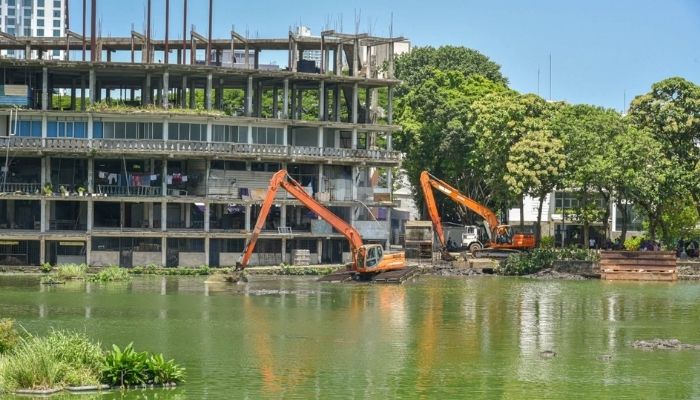
Even as the seawater flushing project prepares for launch, the SLLDC has been actively engaged in preparatory restoration measures. These efforts are replete with logistical challenges, including the removal of significant volumes of floating waste and debris that have historically marred the lake’s surface. Teams are also working to clear aquatic weeds and clean the lake banks, which are vital for the establishment of a healthy riparian buffer.

Furthermore, dredging operations have commenced in the south-western section of the lake, particularly in the vicinity of the Gangaramaya Temple. The removal of accumulated silt is critical for several reasons: it improves the lake’s storage capacity, facilitates better water circulation, and enhances the navigability of the water for potential boat services. This meticulous work is part of a broader strategy to transform the lake into a functional recreational space for the residents of Colombo and visitors alike.
Looking Toward a Sustainable Future
The short-term technical project funded by Nahil Wijesuriya is viewed as a vital catalyst for a more comprehensive, long-term restoration programme. The Sri Lankan government has signalled its commitment to this vision by allocating specific funds in this year’s Budget for the ongoing maintenance and beautification of Beira Lake. The objective is to transition from reactive cleaning to a sustainable management model that prevents future pollution at its source.
By identifying and mitigating pollution sources, such as illegal sewage discharge and industrial effluent, the authorities aim to ensure that the lake remains clean for generations to come. The integration of modern technology, private philanthropy, and dedicated public service represents a new chapter for Colombo’s urban environment.
For Sri Lankans abroad, news of such developments is a source of immense pride and optimism. The transformation of Beira Lake from a neglected water body into a “Greener Heart” for the city reflects the untapped potential of Sri Lanka’s urban landscapes when supported by visionary leadership and community cooperation. As the project progresses, it is expected that Beira Lake will once again become a vibrant hub for tourism, leisure, and ecological biodiversity, standing as a symbol of a modern, environmentally conscious Sri Lanka.
At eLanka, we remain committed to sharing these positive stories that celebrate the achievements and philanthropic spirit of Sri Lankans worldwide. We invite our readers to stay informed about such transformative projects through our Business Directory and our regular community updates.
Source: https://www.newswire.lk/2026/07/09/private-funding-pledged-for-beira-lake-clean-up-project/
This article was written based on the source https://www.newswire.lk/2026/07/09/private-funding-pledged-for-beira-lake-clean-up-project/, kindly email us at info@eLanka.com.au if any information needs to be corrected.
At eLanka, we respect the rights of creators. If we have used an image you own and you’d like it removed, please email us at info@elanka.com.au and we’ll handle it promptly.


