
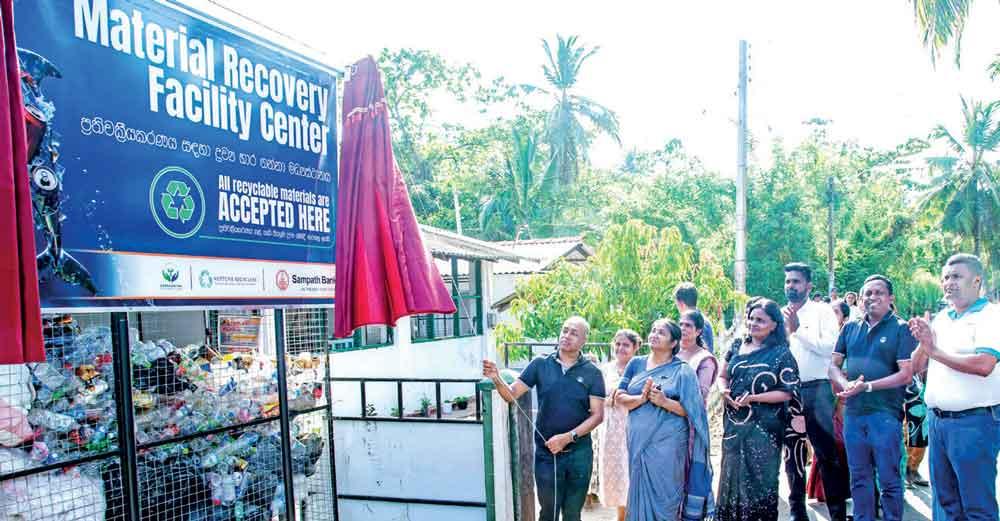
The preservation of Sri Lanka’s pristine maritime environment has received a significant impetus following the recent inauguration of a state-of-the-art Material Recovery Facility (MRF) in the coastal enclave of Dickwella, Batheegama. This strategic establishment is a cornerstone of the “A Breath to the Ocean” initiative, a comprehensive corporate social responsibility programme spearheaded by Sampath Bank PLC in collaboration with esteemed partners, including Neptune Recyclers and the Sobakantha Foundation. The facility represents a sophisticated intervention designed to address the escalating crisis of marine plastic pollution by intercepting non-biodegradable waste before it enters the fragile oceanic ecosystems of the southern coast.
The official handing over ceremony was marked by a sense of institutional commitment, as Dr Lalith Weragoda, the Chief Transformation Officer at Sampath Bank PLC, formally unveiled the facility and transferred its management to local stakeholders. This transition signifies a deliberate shift towards a community-owned model of environmental governance, whereby the responsibility for ecological stewardship is vested in the very individuals who reside within and depend upon these coastal landscapes. By establishing this infrastructure, the bank and its partners are not merely providing a physical site for waste collection but are instilling a systematic approach to resource recovery that aligns with global sustainability standards.

Historically, the southern coast of Sri Lanka has been celebrated for its unparalleled natural beauty and biodiversity; however, the burgeoning tide of plastic waste has posed a formidable threat to both marine life and the local tourism economy. The “A Breath to the Ocean” campaign was conceived as a holistic response to these challenges, integrating marine restoration efforts, such as coral farming in the Mirissa waters, with land-based waste management solutions. The Dickwella Material Recovery Facility is specifically engineered to function as a critical filter, ensuring that discarded plastics are diverted from the shoreline and processed into high-quality secondary raw materials, thereby contributing to a circular economy.
The partnership with Neptune Recyclers (Pvt) Ltd. has been instrumental in providing the technical expertise required for the efficient operation of the MRF. Azleen Majeed, the Chief Executive Officer of Neptune Recyclers, has emphasized the importance of professional waste management frameworks in mitigating the environmental footprint of urban and rural communities. Through this collaboration, the facility is equipped to handle significant volumes of plastic waste, which are then systematically sorted, cleaned, and prepared for recycling, effectively transforming a significant ecological liability into a valuable economic asset.

Central to the success of this initiative is the involvement of the Sobakantha Foundation, an organisation dedicated to social and environmental upliftment. The project has directly empowered approximately 384 women from the local community, who have been trained and transitioned into environmental stewards and micro-entrepreneurs. These women play a pivotal role in the waste collection and sorting process, gaining not only a sustainable source of income but also a renewed sense of agency within their society. This socio-economic dimension of the project underscores the bank’s vision of social consciousness, where environmental protection and community development are viewed as inextricably linked objectives.
The establishment of the MRF in Dickwella serves as a testament to the power of public-private-community partnerships in achieving long-term ecological goals. It is observed that such facilities are essential in regions where formal waste management infrastructure may be insufficient to cope with the modern influx of plastic consumption. By fostering a sense of local ownership, the project ensures that the facility will remain operational and effective long after the initial implementation phase, as the community itself becomes the primary beneficiary of a cleaner and more prosperous coastline.

Furthermore, the “A Breath to the Ocean” initiative reflects a broader trend within the Sri Lankan corporate sector to move beyond traditional philanthropy towards impactful, science-based environmental interventions. Sampath Bank’s commitment to restoring coral reefs and replanting mangrove wetlands complements the waste management efforts at Dickwella, creating a multifaceted shield for the island’s marine heritage. The long-term vision of the bank involves replicating such successful models across other vulnerable coastal regions, thereby creating a national network of community-led environmental protection zones.
In conclusion, the inauguration of the Dickwella Material Recovery Facility represents a triumph of innovation, collaboration, and social responsibility. As the facility begins its operations, it stands as a beacon of hope for the future of Sri Lanka’s oceans, proving that through collective action and strategic investment, the tide of plastic pollution can be turned. The eLanka community celebrates such positive stories of achievement and sustainability, recognizing the profound impact these initiatives have on the natural legacy of our beloved motherland.
This article was written based on the source https://www.dailymirror.lk/business/Sampath-Bank-hands-over-Dickwella-material-recovery-facility/215-339721, kindly email us at info@eLanka.com.au if any information needs to be corrected.
At eLanka, we respect the rights of creators. If we have used an image you own and you’d like it removed, please email us at info@elanka.com.au and we’ll handle it promptly.


